Where to eat real Tuscan crostini in Florence
Crostini and bruschetta: not the same thing
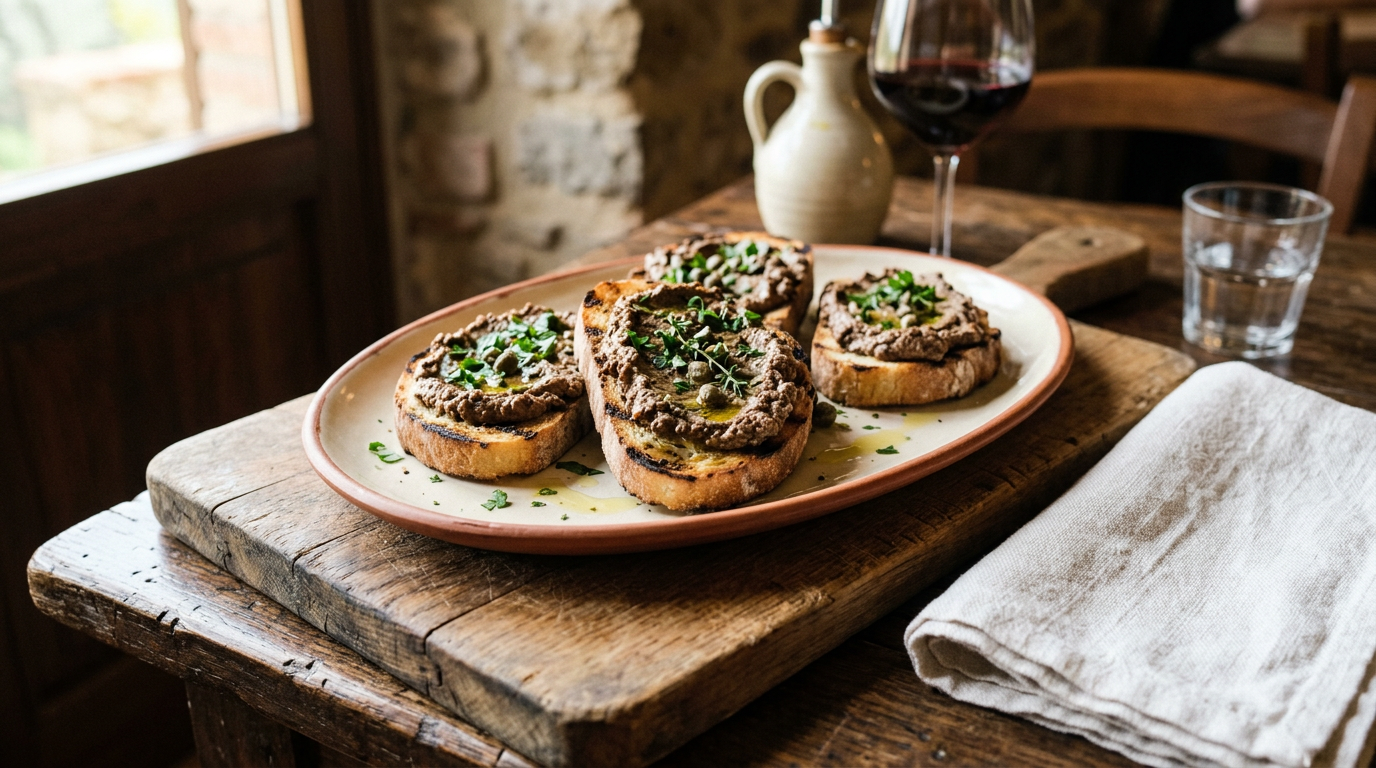
Visitors to Florence frequently confuse crostini toscani with bruschetta. The difference is structural. Bruschetta is grilled bread, usually from the previous day, rubbed with garlic and drizzled with olive oil; it is a vehicle for toppings but is itself the focus. Crostini toscani are small slices of unsalted Tuscan bread, toasted or briefly pan-fried until firm and dry, spread with a liver-based pâté. The bread is a carrier. The pâté is the dish.
Tuscan bread (pane sciocco) is made without salt, a practice that dates to a medieval trade dispute with Pisa that blocked Florentine access to salt. The taste is bland by design. This flatness is important because it does not compete with the intensity of the chicken liver spread. Salted bread, used in most of Italy and all of northern Europe, would change the balance entirely.
The spread, fegatini in Italian, crostini neri in some older Florentine cookbooks, is made from chicken livers, onion, capers, sage, vin santo or white wine, butter, and anchovy. The livers are sautéed, deglazed, and then minced or blended to a rough paste. The result is deeply savoury, slightly bitter from the liver, and cut by the salt of the capers and anchovy. It is served at room temperature or warm.
The recipe: how it is made properly
The preparation of genuine crostini neri requires no exotic equipment and about forty minutes. Start with 300 grams of fresh chicken livers, cleaned of any bile ducts and membranes, which will cause bitterness if left in. Sauté half an onion in olive oil until soft, about eight minutes. Add a sprig of sage and the livers, cook over medium-high heat for five to six minutes until just cooked through but not dry. Deglaze with 80 ml of vin santo or dry white wine and reduce until almost evaporated.
Transfer everything to a chopping board. Add a tablespoon of capers (rinsed if salted), two anchovy fillets, and a knob of butter, about 20 grams. Chop the whole mixture finely with a knife; the traditional result is a rough paste, not a smooth mousse. Season carefully with salt, keeping in mind the capers and anchovies are already salty. Return the paste to the pan, add a tablespoon of broth if it seems dry, and heat gently for two minutes. Spread on toasted slices of unsalted Tuscan bread cut about one centimetre thick and serve immediately.
This version is the baseline. Some households add a small amount of brandy instead of vin santo. Others include the chicken heart with the livers. Proportions vary. What does not vary is the use of chicken livers, not pork or beef liver, and the chopped rather than blended texture.
Where to eat crostini in Oltrarno
In Oltrarno, several places serve crostini toscani as they should be: as an antipasto before a meal, on a board with two or three slices, at a price that reflects simplicity rather than event dining.
Buca Mario serves a plate of mixed Tuscan antipasti that includes crostini neri for approximately €12 in 2026. The portion is generous and the pâté is made in-house.
Trattoria del Carmine, on Piazza del Carmine about 1.1 kilometres from Via Pisana 191, is a neighbourhood restaurant where the crostini are sold as a standalone starter at €6. The liver paste here is coarser than at tourist-facing restaurants, which is the correct texture.
Il Latini, via dei Palchetti, includes crostini in its fixed-price menu at around €35 per person including wine and all courses. This is the communal-table format where everything arrives without ordering, and the crostini are brought out immediately after you sit down.
Osteria dell’Enoteca on Via Romana, about 600 metres from Via Pisana 191 toward the Boboli Gardens, offers a higher-end version with house-made ricotta crostini alongside the traditional liver. The liver version costs €8 as a starter. The restaurant has a longer wine list and a quieter atmosphere than the trattorias above.
Wine bars (enoteche) in Oltrarno, particularly around Via dei Serragli and Via Maggio, typically serve crostini as cicchetti with the aperitivo service between 18:00 and 21:00. These are smaller slices, sometimes only two per order, at €3–€5.
What to look for and what to avoid
Authentic crostini neri will be spread generously and should have a rough, matte surface. They should be served warm or at room temperature. If they arrive cold and refrigerator-firm, the paste was made in advance and not heated before service, this is a compromise in quality.
The bread matters. Unsalted Tuscan bread has a slightly grey-white crumb and a dry, firm texture when toasted. If the bread being used is soft or has a yellow crumb, it is likely salted bread from an industrial bakery, which alters the final taste significantly.
Avoid places where crostini are listed alongside bruschetta on a menu titled “sharing plates” or “antipasto selection” with a price over €15 for a small board. This framing is directed at visitors expecting an aperitivo-style snack format. The traditional dish is cheaper, simpler, and served as part of a proper meal sequence.
Buying at the market
The Mercato di Sant’Ambrogio, about 2 kilometres from Oltrarno via Ponte alle Grazie, is the better market for buying ingredients for crostini. The chicken liver and heart vendors operate from the butcher counters inside the covered section, with prices around €5–€7 per kilogram in 2026. Unsalted Tuscan bread is available from the bread stalls outside, priced at approximately €3 per large loaf.
The Mercato Centrale in San Lorenzo has a butcher counter specialising in offal on the ground floor. They often have cleaned and trimmed chicken livers ready for immediate use. This market is more convenient for visitors staying north of the Arno.
Where to stay
Oltrarno is the neighbourhood where crostini toscani are still eaten as a quotidian starter rather than a tourist attraction. Staying close to this area means you can eat at the trattorias where the dish is made routinely, not for show. De’ Medici on Via Pisana 191 is within easy walking distance of Trattoria del Carmine, Il Latini, and most of the wine bars on Via dei Serragli.