Where locals eat in Florence: trattorias in 2026
What a real Florentine trattoria looks like
The word trattoria is used loosely in Florence. Restaurants near the Uffizi that serve pasta with truffle cream and bistecca at €45 also call themselves trattorias. The distinction that matters is not the label but the observable facts: who is eating, what time they arrived, what they are paying, and how long they stay.
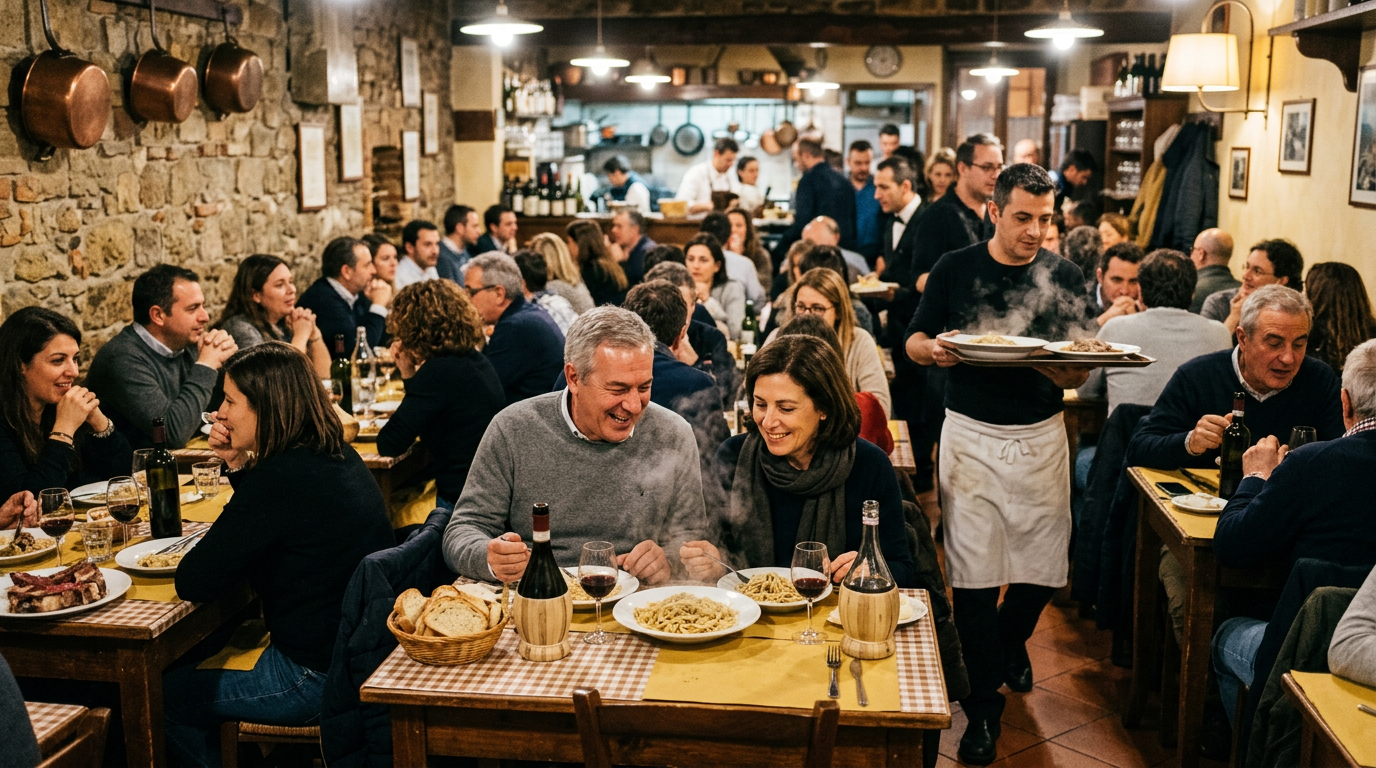
A genuine Florentine lunch place fills between 12:30 and 13:00. By 14:00 it is clearing. The clientele is predominantly Italian, predominantly local, and includes people who have walked five minutes from an office or a building site. The tables are close together. The noise level is high. No one is consulting a map. Payment is often cash only, or the card machine is technically broken in a way that everyone accepts without complaint.
The menu is short and changes daily. The standard offer at a working trattoria in 2026 is a primo (pasta or soup), a secondo (meat or fish), a contorno (vegetable side), and water and house wine included. The price for this complete meal typically ranges from €12 to €18. Some places have moved to à la carte only, in which case a primo and a secondo with water will cost €15 to €22. Anything substantially above that in a modest-looking establishment is a warning sign.
Which neighbourhoods to search
The concentration of tourist-oriented restaurants is highest within about 400 metres of the Uffizi, the Duomo, and Ponte Vecchio. This does not mean there are no good places nearby, there are, but the signal-to-noise ratio is worse, and the prices are consistently higher. Moving away from these landmarks by ten minutes on foot changes the economics.
Oltrarno, the south bank neighbourhood, has a denser concentration of neighbourhood eating places than the tourist-facing areas. The streets west of Piazza Santo Spirito, around Borgo San Frediano and Via Pisana, still have trattorias and basic lunch counters that serve a predominantly local clientele. Piazza Santo Spirito itself has become more gentrified in recent years and the restaurants facing the square charge accordingly, but the side streets off it remain more honest.
Sant’Ambrogio, the neighbourhood east of Santa Croce around the market of the same name, is another area worth searching. The Mercato di Sant’Ambrogio at Via Pietrapiana 14 has a canteen inside where the daily menu is cooked using produce from the market stalls. It serves from about 11:30 and runs out of some dishes by 13:30. A full meal costs under €10. The surrounding streets have a cluster of small lunch places that follow the same model: good ingredients, short menu, fast service.
The area around Via dei Servi and Piazza Santissima Annunziata, north of the Duomo, is less frequented by tourists than the historic centre and has several reliable trattoria-style places, particularly at lunch. The university buildings nearby mean the price points stay low.
How to read the signs at the door
Several physical and visual cues reliably indicate whether a restaurant is serving a local clientele. The most informative is the menu posted at the door. If the menu is printed on heavy card, laminated, and lists twelve pasta dishes and four types of pizza, this is not a working trattoria. If the daily specials are written on a chalkboard or paper sheet and include two or three options for each course, the kitchen is adjusting to what arrived that morning.
The second cue is the visible wine. Local lunch places serve house wine in carafes, usually anonymous Chianti or Montepulciano at around €5 to €8 per litre. If the wine list is extensive and includes bottles at €30 and above, the restaurant is not primarily serving the neighbourhood. A jug of red wine on a table with workers eating bread is the correct image.
Handwritten receipts or old-model cash registers, still legal in Italy for establishments below a certain threshold, suggest a place that has not invested in modernisation, which usually means it has not needed to. The presence of a television showing sport or news, which is a persistent feature of genuinely local Italian eating places, is also a useful indicator, though less reliable.
What to eat and what to pay
The canonical Florentine lunch for a working person in 2026 follows a predictable structure. First course: ribollita (the thick bread and vegetable soup), pasta e fagioli, or a pasta dressed simply with ragù or a vegetable sauce. Second course: roast chicken, braised beef, or tripe. Side: white beans in olive oil, cavolo nero, or roasted potatoes. Bread is always on the table and is charged separately, usually €1 to €2 per person.
Florentines do not typically eat salad as a main course at lunch and are mildly suspicious of visitors who do. The insalata mista is available but is ordered as a side, not a substitute for a proper secondo. Similarly, dessert at a working lunch is rare, maybe an espresso, never a long deliberation over the dessert menu.
The bistecca alla Fiorentina is the city’s most famous dish but is not a typical everyday lunch item. It is expensive, around €5 to €7 per 100 grams, with a minimum portion of 600 to 800 grams for two people, and is typically eaten at dinner. If a trattoria is offering bistecca at lunch for €15 per person, it is not a good sign about the cut or the sourcing.
House wine at a genuine local place costs around €3 to €4 for a quarter litre (a quartino). A half litre is €5 to €7. Avoid restaurants that do not have a house wine option, as this indicates the establishment is oriented toward a clientele that will spend more.
Timing and practical details
The Florentine lunch service is time-limited in a way that differs from tourist restaurants, which serve from noon until 15:00 or later. Working trattorias typically open at 12:00 or 12:30 and close kitchen service at 14:00. If you arrive at 13:45 asking for a full meal, you may find the kitchen has closed or that only the secondo remains. Arriving at 12:15 is always safer.
Booking is rarely accepted or necessary at these places. They operate on a first-come basis. Tables fill and empty quickly. If the room is full when you arrive, wait five minutes, seats turn over fast. If there is a queue of Italians outside at 12:30, join it without hesitation.
Many genuine lunch places are closed on Saturday lunch and Sunday entirely. This reflects the working-week character of the clientele. If you are visiting on a weekend and want to eat at a genuine neighbourhood place, you will need to look harder, or accept that dinner on Friday or lunch on Monday will be a better opportunity.
Where to stay
Staying in Oltrarno puts you within walking distance of the neighbourhood’s surviving lunch culture, concentrated in the streets west of Piazza Santo Spirito and around Borgo San Frediano. For a base on the south bank close to these streets, De’ Medici is a practical choice for visitors who want to eat and live like Florentines rather than tourists.