Artisan cantuccini in Florence: where to find the real ones
What cantuccini actually are
The biscuit now sold throughout Italy as a cantuccino originated in Prato, 17 km north-west of Florence, not in Florence itself. The original recipe, documented at the Biscottificio Antonio Mattei in Prato since 1858, consists of flour, sugar, eggs, almonds, and pine nuts, with no butter or fat added, which is what makes the biscuit so dry and what makes it suited to being dipped in vin santo or sweet wine. The Prato version is correctly called a biscotto di Prato; the name cantuccino is a generic Tuscan term that now covers a wider range of similar twice-baked almond biscuits.
The distinction matters to a baker but less to a visitor. What the visitor should understand is that there is a wide spectrum between the commercial cantuccini sold in cellophane bags at any supermarket for €3–€5 per 200 g and the handmade versions that use whole unpeeled almonds, proper egg-wash glazing, and a second bake timed to produce a specific moisture content. The industrial versions are not bad; they simply lack texture variation and the faint bitterness from the almond skins that defines the better artisan biscuit.
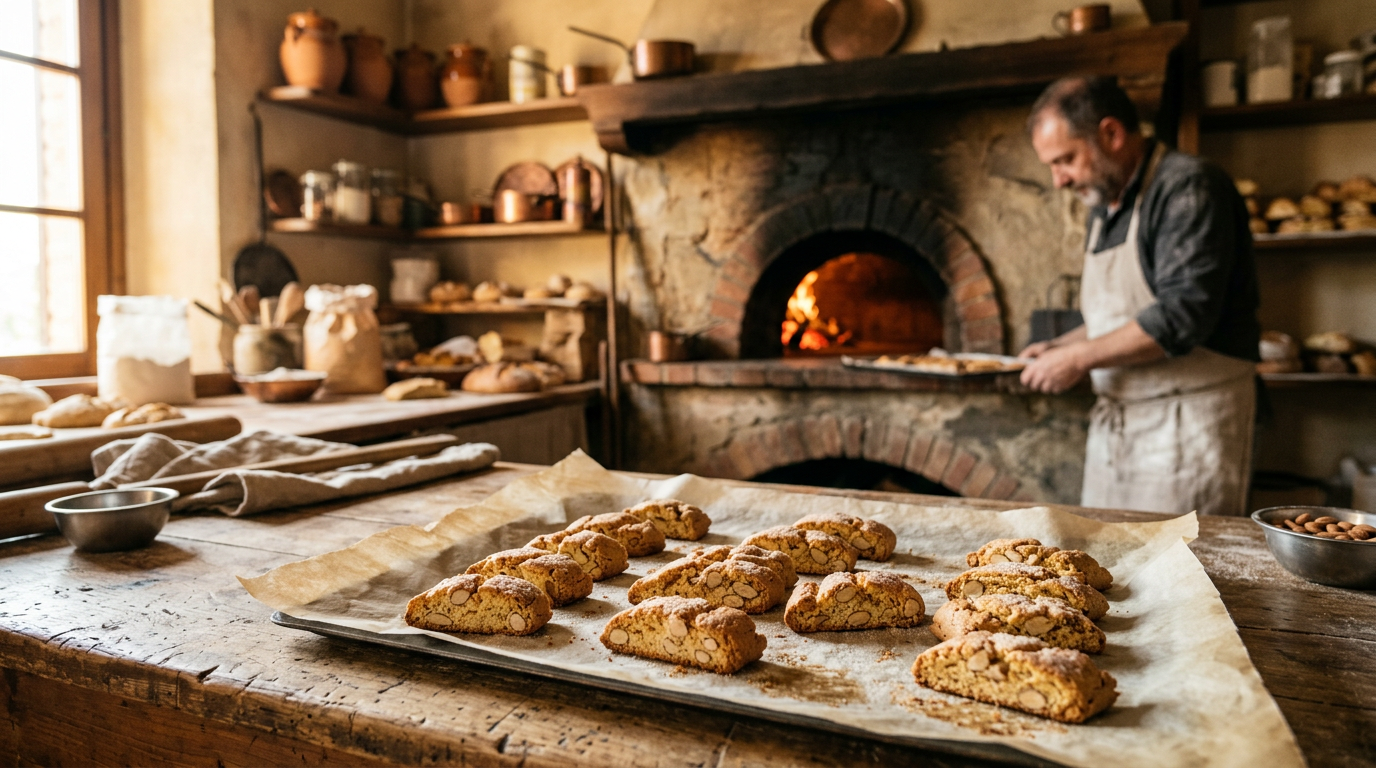
A properly made cantuccino should break with a distinct crack, not crumble. The interior should show whole almond cross-sections, not fragments. The crust should be golden-brown and slightly caramelised at the edges. Dipped in vin santo, it should absorb just enough liquid to soften without disintegrating.
The original: Biscottificio Mattei in Prato
Antonio Mattei’s bakery at Via Ricasoli 20 in Prato is 35 minutes from Florence Santa Maria Novella station by regional train, running roughly every 30 minutes with a ticket costing €3.60 in 2026. The bakery opens Monday to Saturday at 8:00 a.m. A 500 g bag of their classic biscotti di Prato costs €9.50. They also sell cantucci with chocolate, with figs, and with pine nuts, but the plain almond version remains the benchmark.
The shop itself is small, the queues on Saturday mornings long, and the experience entirely without tourism industry staging. You queue, you buy, you leave. The product ships across Italy and is available at selected delicatessens in Florence, but the price at the source is lower and the freshness is noticeably better.
Artisan producers in Florence
In Florence proper, a handful of bakeries and pastry shops make cantuccini on the premises rather than buying them wholesale. The quality gap between these and the commercial alternatives is measurable.
Biscotteria Lungarno on Via de’ Bardi 45, a five-minute walk from Ponte Vecchio along the Oltrarno bank of the Arno, produces cantuccini daily, using whole Sicilian almonds and a recipe that has remained stable for two decades. The shop sells them loose by weight: €22 per kg, or approximately €2.20 for a 100 g serving. They also sell mixed bags of other Tuscan biscuits, ricciarelli, brutti ma buoni, cavallucci, which make a practical tasting selection.
Pasticceria Buonamici on Via Romana 103, about 1.8 km from Via Pisana 191 heading north-east towards the Pitti Palace, makes both classic and whole-wheat cantuccini. The whole-wheat version is denser and slightly less sweet, with a more pronounced almond flavour. At €18 per kg, it is slightly cheaper than the Lungarno shop. They open at 7:30 a.m. and are typically sold out of fresh cantuccini by early afternoon.
Saporito on Borgo San Jacopo, running parallel to the Arno between Ponte Vecchio and Ponte Santa Trinita, is a smaller operation that sells artisan Tuscan food products from multiple producers. Their cantuccini selection changes by season and producer, with prices ranging from €15–€26 per kg depending on origin. The staff will explain the differences between products, which makes it a useful stop for anyone wanting to understand the range.
How to pair cantuccini correctly
The traditional pairing is vin santo, a Tuscan passito wine made from partially dried Trebbiano and Malvasia grapes, aged in small wooden barrels for a minimum of three years. The result is an amber, oxidised, moderately sweet wine with a characteristic nutty quality that complements the almond biscuit. A 375 ml bottle of a good vin santo, from producers like Isole e Olena, Avignonesi, or San Giusto a Rentennano, costs €18–€35 at an enoteca in Florence.
The correct method is to dip the cantuccino briefly, two to three seconds, in the vin santo, then eat it before it becomes soggy. The goal is not to fully soften the biscuit but to add a layer of wine flavour while retaining some crunch.
Several enoteche in Oltrarno serve vin santo with cantuccini as a tasting portion: Enoteca Pitti Gola e Cantina on Piazza Pitti, directly opposite the Palazzo Pitti entrance, charges €8–€12 for a glass of vin santo with a small plate of biscotti. Buca Mario on Piazza degli Ottaviani (10 minutes north of the Pitti Palace on foot) offers a similar pairing. Both are genuine alternatives to the tourist-facing dessert menus in the restaurant strip near Santa Croce.
Seasonal variations and specialty versions
Several Florentine bakeries produce seasonal cantuccini that depart from the standard almond recipe. Winter versions sometimes include dried orange peel, a small amount of anise, or dark chocolate chips, though purists regard any addition to the almond-only formula as a deviation from the original. Easter versions in some bakeries use almond paste rather than whole almonds, producing a softer, more cake-like texture.
The category of “cantucci” has also expanded commercially to include versions made with pistachios (€2–€4 more per kg than almond), hazelnuts (cheaper, usually a lower-quality signal), and even dried fruits. These are not traditional and should be evaluated as separate products rather than variations on the original.
At the Mercato di Sant’Ambrogio on Piazza Ghiberti, about 3 km from Via Pisana 191 via the Ponte alle Grazie, a market vendor sells home-produced Tuscan biscuits on Tuesday and Thursday mornings. The cantuccini are sold loose, unpackaged, and tend to vary slightly batch to batch, the characteristic of genuine artisan production.
Where to stay
A base in Oltrarno puts you within a ten-minute walk of the city’s best artisan food shops, the bakeries on Via Romana and Borgo San Jacopo, and the enoteca strips around Piazza Pitti. For visitors who intend to eat seriously during their time in Florence, the location matters as much as any individual restaurant choice. De’ Medici sits at the edge of this neighbourhood and serves as a practical anchor for daily food exploration on foot.