How to buy Chianti wine well in Florence
Understanding Chianti before you buy
Chianti is produced across a broad area of central Tuscany, roughly between Florence to the north and Siena to the south. The denomination covers several distinct sub-zones with separate regulations and quality profiles. Knowing the difference between them matters when you are standing in a wine shop deciding what to spend money on.
The basic Chianti DOC covers a large geographic territory including areas in several provinces. Wine labelled simply “Chianti” can come from anywhere within this zone. The quality is inconsistent and the price is generally low, between €6 and €15 for a decent bottle. This is everyday drinking wine, not investment or serious food wine.
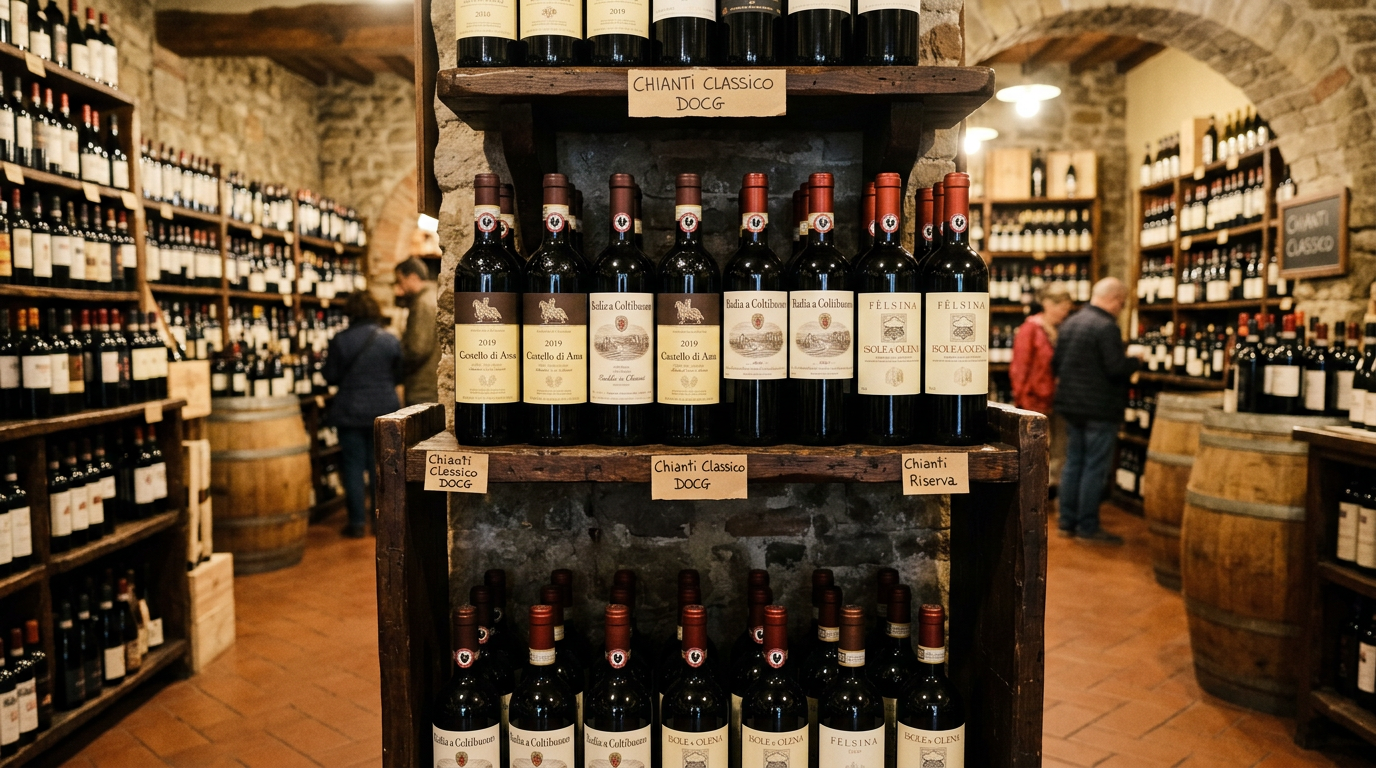
Chianti Classico is the sub-zone that occupies the original historic heartland of the denomination, between Greve in Chianti to the north and Castelnuovo Berardenga to the south. The area covers approximately 7,200 hectares of vineyard. Wine labelled Chianti Classico must contain at least 80% Sangiovese grapes and must be aged for a minimum of 12 months before release. The black cockerel (Gallo Nero) on the label indicates compliance with the Classico consortium’s standards. A solid Chianti Classico in 2026 costs between €15 and €30.
Within Chianti Classico, there are two additional quality tiers. Chianti Classico Riserva requires at least 24 months of ageing and a minimum of three months in bottle. Gran Selezione, the top classification introduced in 2014, requires at least 30 months of ageing including three months in bottle and must come from a single vineyard or a selection of the producer’s best grapes. Gran Selezione bottles typically retail between €35 and €80, though wines from top producers like Fontodi, Isole e Olena, and Castello di Ama can go considerably higher.
Which vintages to look for in 2026
The decade from 2015 to 2024 produced several outstanding Chianti Classico vintages alongside a few that are better value than their scores suggest. Understanding this helps you buy intelligently rather than defaulting to the most recent release.
The 2015 and 2016 vintages are both considered exceptional years for Chianti Classico. Wines from these years are now fully mature and, for Riserva and Gran Selezione bottles, are drinking at or near their peak. If you find 2015 or 2016 Classico at a reasonable price in a Florence shop, it is worth buying. A 2016 Gran Selezione from a serious producer is a significant bottle.
The 2019 and 2020 vintages are more variable. 2019 produced elegant, aromatic wines that are approachable young. 2020 was warmer and produced more concentrated wines that need more time. If you are buying to drink within the next year, 2019 is the better choice. If you are buying to cellar, 2020 has more long-term potential.
The 2021 vintage is considered very good and is now coming into shops as Riserva and early Gran Selezione releases. 2022 was extremely hot and produced wines with very high alcohol and dense tannins; opinions are divided on the long-term outcome. 2023 was a more balanced year and will likely produce wines similar in character to 2019.
Where to buy in Florence
The best wine shops in Florence for Chianti are concentrated in two areas: Oltrarno and the Sant’Ambrogio neighbourhood east of Santa Croce. Both areas have independent wine merchants who have sourced directly from producers and carry wines that do not appear in supermarkets or tourist-district shops.
In Oltrarno, the shops around Piazza Santo Spirito and along Borgo San Frediano tend to be small, personal, and staffed by people who know the producers personally. You can expect to pay honest prices and receive a recommendation based on your budget and what you plan to drink with the wine. Most of these shops will let you taste before you buy, especially if you are considering multiple bottles.
The Enoteca Pitti Gola e Cantina on Piazza de’ Pitti has a substantial cellar and focuses on Tuscan wines including Chianti Classico from smaller producers. A similar model applies at several other shops within ten minutes’ walk. Prices are generally 10–20% above supermarket prices but the selection and the advice are worth it.
For buying directly from producers, the town of Greve in Chianti is 28 kilometres south of Florence and reachable by bus (the SITA bus from Via Santa Caterina da Siena takes about 50 minutes, costs around €4 one way). Greve has several enotecas and the market square is surrounded by shops selling wine from local producers. Buying at the cellar door from a Chianti Classico estate typically costs 10–30% less than buying the same wine in Florence.
Practical considerations for buying and transporting
Wine bought in Florence shops is sold at room temperature. If you are buying to drink in the next few days, ask whether the shop has a chilled section for bottles you want to open soon. Most shops will not have this, but they can advise on nearby places that do.
Transporting wine home on a plane requires some planning. Italian regulations permit carrying wine in checked luggage without restriction, though airlines may have weight limits. Bottles should be wrapped in clothing or in purpose-made padded wine sleeves, which are available in most serious wine shops in Florence for €1 to €3 per sleeve. Foam or cardboard wine carry-boxes are also available, usually free if you are buying six or more bottles.
Shipping wine internationally from Florence is possible through specialist logistics companies and through some wine shops that offer the service directly. The cost varies significantly by destination: shipping a case of twelve bottles to the UK costs approximately €40 to €60; to the United States, €80 to €120 per case, plus customs duties. Check your home country’s import regulations before ordering, the US limits vary by state.
A practical alternative for buyers who want larger quantities is to order directly from a producer’s website and have the wine shipped to your home address. Many Chianti Classico producers have English-language websites and ship internationally. This bypasses the airport entirely and is often cheaper per bottle than buying in Florence for large quantities.
Chianti at restaurants and wine bars
Drinking Chianti at a wine bar in Florence is both a practical way to taste before you buy and a legitimate end in itself. A glass of Chianti Classico at a wine bar in Oltrarno costs between €5 and €9 depending on the producer and the vintage. Gran Selezione poured by the glass is less common but available at more specialized establishments, at €12 to €18 per glass.
The standard carafe wine at a trattoria, the vino della casa, is not usually labelled as Chianti Classico and is not trying to be. It is light, dry, slightly tannic, and designed to go with food. It costs around €5 to €7 per half litre. Drinking it is a valid Florentine experience and not a compromise.
When ordering Chianti at a restaurant, it is worth asking whether the list includes any Classico from the vintage years mentioned above. A 2016 Classico on a restaurant list at a reasonable markup is worth ordering over a newer, cheaper wine, especially with a bistecca or a braised meat dish.
Where to stay
Oltrarno is the natural neighbourhood for wine-oriented visits to Florence, with its concentration of independent wine shops and enotecas within walking distance of each other. For accommodation in the district, De’ Medici is centrally placed for both the shops and the wine bars of the south bank.